
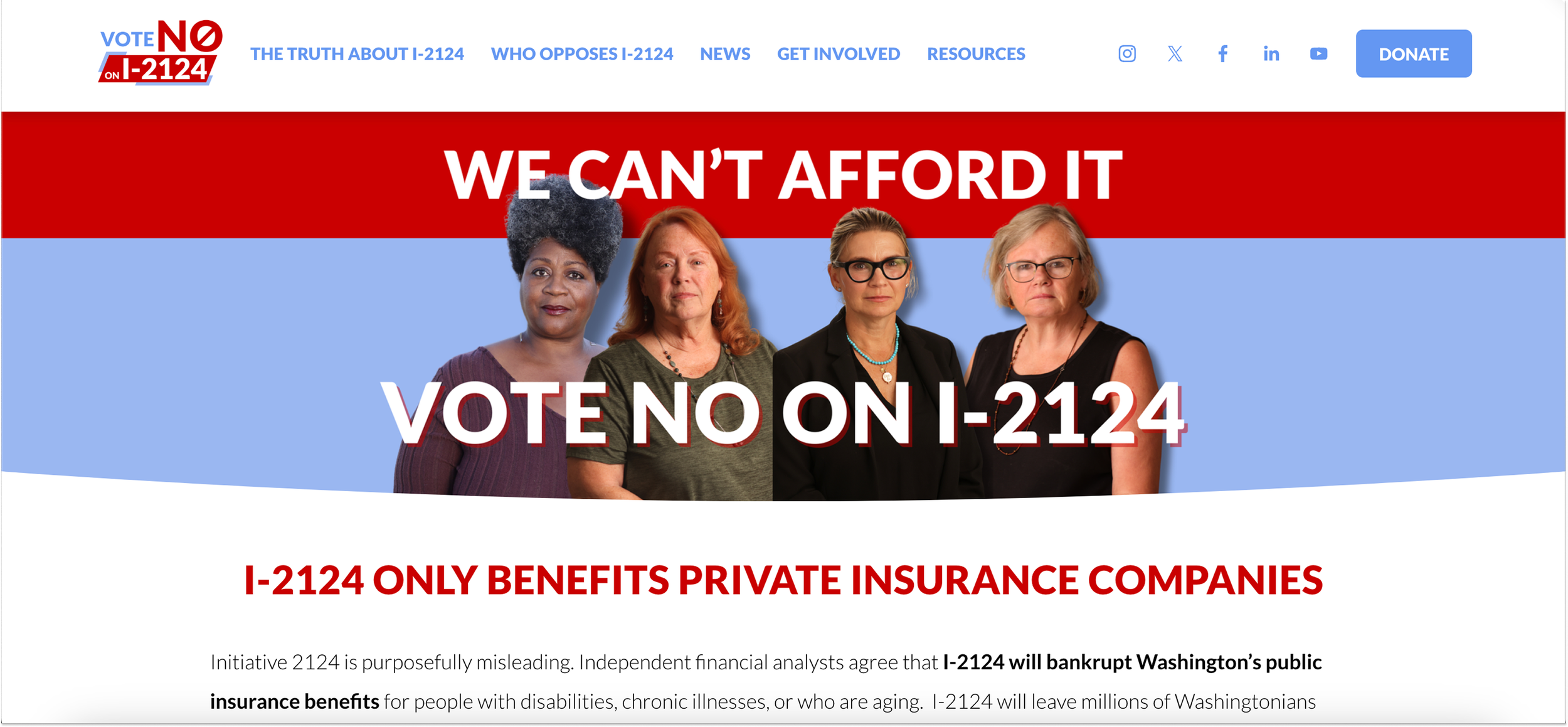
Managing a Digital Campaign Under Constant Change
No on I-2124 · Washington State Ballot Initiative
Role: Digital Program Lead / UX & Digital Strategy
Scope: Website strategy, information architecture, UX, design system, stakeholder management, ongoing digital operations
Summary:
A high-stakes campaign needed a central digital hub capable of adapting almost daily as messaging, voter needs, campaign priorities, and political conditions changed. I led the ongoing development and management of the campaign website, balancing urgent stakeholder requests with usability, information architecture, and the realities of a rapidly evolving campaign.
The Challenge
The No on I-2124 campaign needed a central digital hub where Washington voters could quickly understand the initiative, find accurate information, take action, and stay informed throughout the election.
The challenge wasn't simply launching a website. The campaign was evolving constantly, which meant the website had to evolve with it—sometimes nearly every day.
New information, campaign priorities, petitions, forms, sign-ups, and voter needs continually changed what the site needed to do.
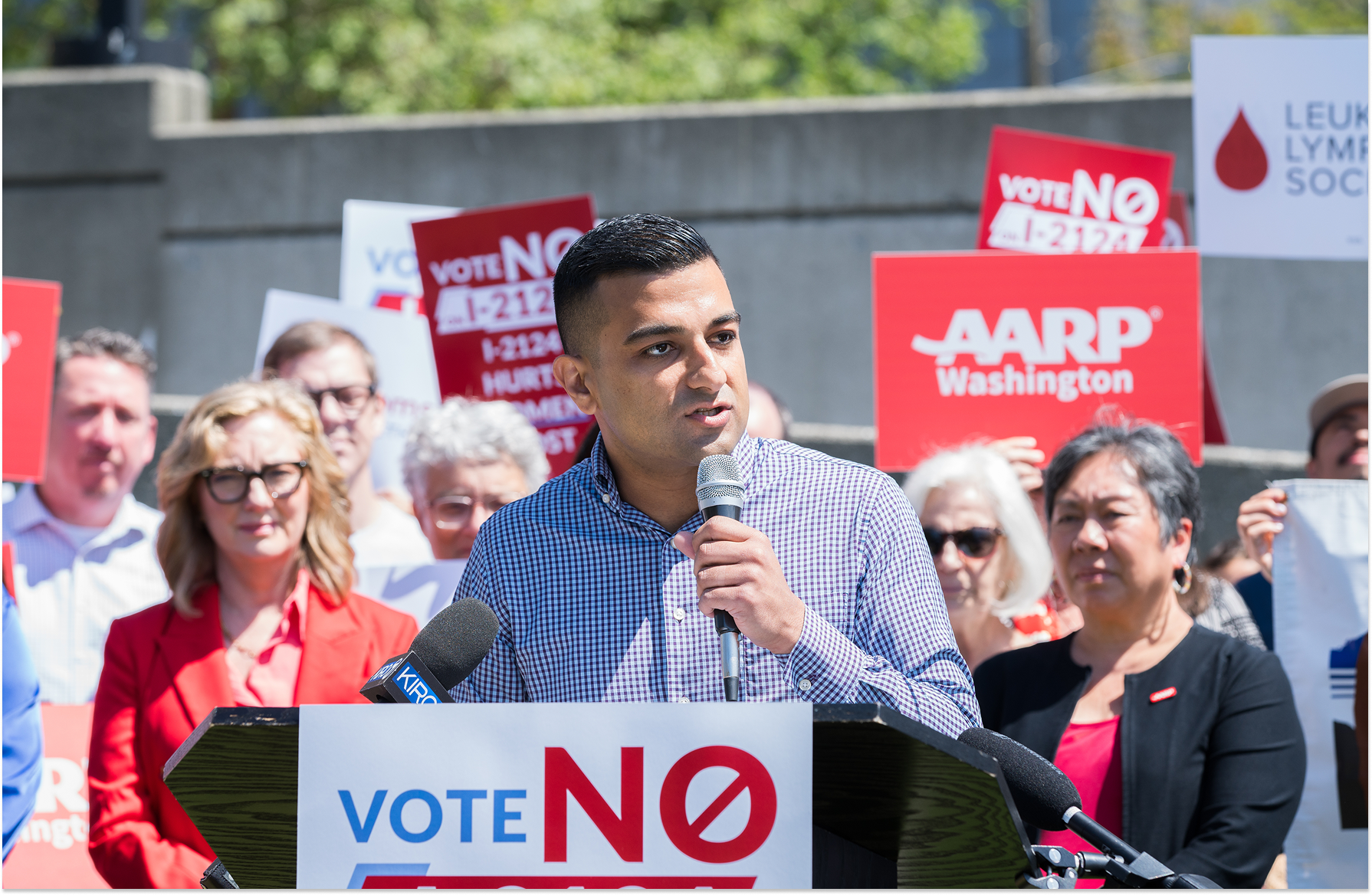
My Role
I was responsible for:
Digital strategy and information architecture
UX/UI design
Website planning and ongoing delivery
Client/stakeholder communication
Design-system development
Continuous content and feature updates
Evaluating and implementing new requests
Maintaining usability as the site expanded

Managing ambiguity
As the campaign progressed, new needs emerged constantly: additional petitions, signup forms, campaign information, updates, and changes based on what voters and the campaign needed in the moment.
My job wasn't simply to say yes to every request—or to reject requests that created problems.
I had to evaluate each request against the site's existing structure, user experience, technical constraints, and campaign priorities, then either find a workable solution or clearly communicate why a different approach was necessary.
Building a System that Could Scale
Because this was an ongoing project rather than a one-time launch, I established a design system that allowed new pages and components to be created consistently as requirements evolved.
At the same time, I continually revisited the site's information architecture to keep the growing amount of content navigable.
By the end of the campaign, the website had grown to 21 pages

The Result
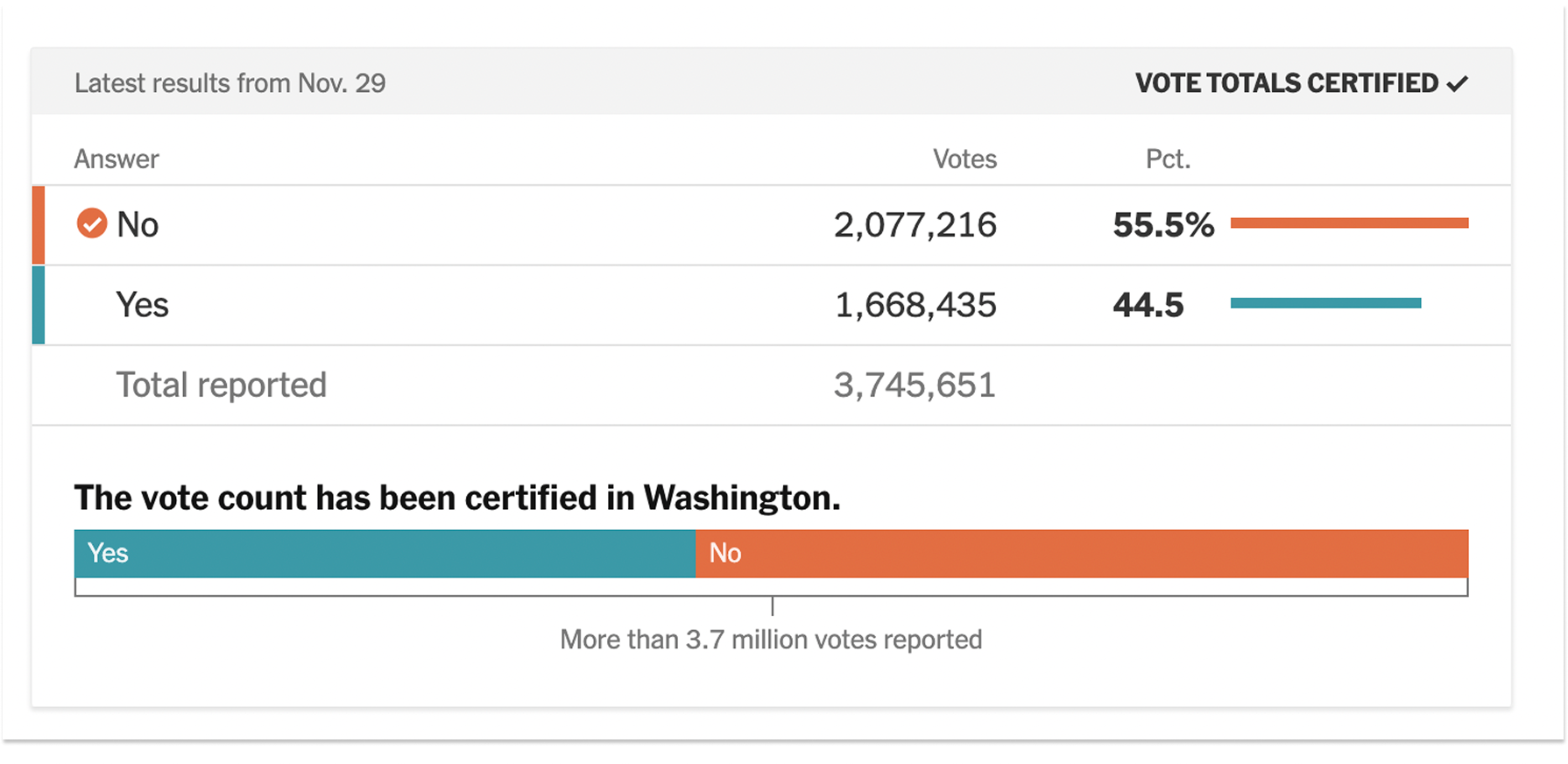
The campaign won.
The No campaign defeated the initiative.
The website served as the campaign's central digital hub for information, news, petitions, volunteer opportunities, endorsements, and campaign advertising throughout the election.
And importantly:
The work didn't end at launch.
The site required nearly daily updates throughout the campaign as information, messaging, and priorities changed.
What I Brought to the Project
Program management
Managing a constantly changing set of priorities throughout a time-sensitive project.
Stakeholder leadership
Translating client requests into workable digital solutions while communicating constraints and tradeoffs.
Systems thinking
Creating reusable design patterns and maintaining structure as the site grew.
UX + information architecture
Keeping a rapidly expanding information ecosystem understandable to users.
Digital operations
Managing a live digital product through continuous change rather than treating launch as the finish line.